Agri Interview
Agri-Drones Are Now a Core Farm Input — Exclusive Interview with Garuda Aerospace Founder Agnishwar Jayaprakash
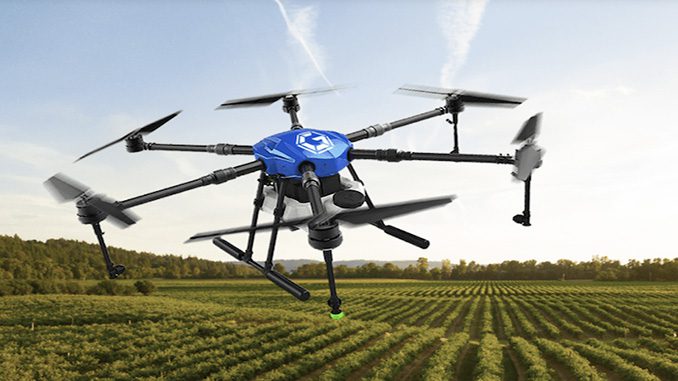
Inputs By Agnishwar Jayaprakash, Founder and Director, Garuda Aerospace
1. What changed in Indian agriculture over the last two years that moved agri-drones from pilot projects to real field deployment?
Over the last two years, Indian agriculture crossed a structural inflection point. What truly changed was not the technology itself but the operating environment around farming. Acute labour shortages during peak spray windows made manual spraying unpredictable and risky for crop outcomes. At the same time, regulatory clarity from the government and targeted subsidies converted drones from a “demonstration tool” into a commercially deployable farm input. The third and most underestimated change was the farmer mindset. Farmers began evaluating drones not as machines but as a service that guarantees timeliness, uniform coverage, and operator safety. Rising input costs certainly added pressure, but it was the combination of labour scarcity, regulatory enablement, and outcome-driven adoption that pushed agri-drones decisively into real field use.
2. Where is drone adoption actually happening today?
Actual adoption is happening in regions where crop economics demand precision and speed. We see consistent, repeat deployment in paddy belts of Tamil Nadu, Andhra Pradesh, Telangana and Punjab, cotton clusters in Maharashtra and Telangana, and horticulture pockets in Karnataka and Tamil Nadu. Paddy, cotton, sugarcane, banana, chilli and grapes are seeing multiple drone spray cycles within the same season. Importantly, adoption is not limited to large farms. Small and marginal farmers access drones through service models, while FPOs and cooperatives drive repeat usage across contiguous landholdings. Large plantations follow a hybrid model, combining ownership with outsourced operations. What distinguishes these regions is not farm size, but the willingness to treat drones as a regular agronomic input rather than a trial intervention.
3. Among spraying, mapping, health scouting and insurance imaging, what is driving paid demand?
Spraying is overwhelmingly the primary driver of paid demand and repeat customers today. Roughly three-quarters of our agri revenue comes from spraying operations, because the value is immediate, visible and measurable within a single season. Mapping, crop health scouting and advisory-linked imaging account for a smaller but steadily growing share, typically adopted after farmers experience consistent spray outcomes. Insurance and documentation-related imaging remains episodic and event-driven rather than recurring. In India’s current agricultural context, farmers first pay for what directly protects yield and reduces effort. Once trust is established through spraying, they become more open to analytics-led services.
4. What does the farmer-level ROI math look like in real terms?
At the farmer level, the ROI is straightforward and seasonal, not theoretical. Drone spraying typically reduces labour dependence by 60–70 percent and cuts water usage by nearly 90 percent compared to conventional methods. Chemical consumption drops by around 20–30 percent due to controlled droplet size and uniform coverage. Just as importantly, farmers gain timeliness—spraying is completed during the optimal window rather than being delayed by labour availability. For FPOs and large farms, the payback period often falls within one to two cropping seasons, while service-based users see positive cash impact in the very first season through cost savings and yield protection.
5. How much does it cost to adopt agri-drones today?
Adoption costs vary depending on whether the farmer is buying a drone or consuming it as a service. Purchase models are largely driven by FPOs, entrepreneurs and large farms, especially when combined with government subsidies. However, the dominant and fastest-growing model remains Drone-as-a-Service. Per-acre spraying costs have now settled into a band that farmers consider acceptable because it replaces labour, reduces chemical use and improves safety. The key shift is that farmers no longer compare drone costs to manual spraying wages alone; they compare it to reliability, speed and crop risk mitigation.
6. What is your real technology moat compared to “any drone plus any pilot”?
The difference is not the drone alone; it is the system behind it. Our moat lies in spray precision under real Indian conditions, including drift control in variable wind environments, redundant safety systems that protect both crops and operators, and high operational uptime during peak seasons. Equally important is diagnostics, maintenance and parts availability at the village and district level. Agriculture does not forgive downtime. A drone that cannot fly during a narrow spray window is a liability, not an asset. Our integrated approach—hardware, software, trained pilots and service infrastructure—is what consistently delivers outcomes in the field.
7. How do you measure spray quality and operational success?
Spray quality is measured through a combination of operational data and agronomic outcomes. We monitor droplet size calibration, spray width consistency, coverage uniformity and weather conditions such as wind speed and humidity before every operation. Drift control and re-spray rates are tracked closely, as is mission completion time per acre. Internally, a successful operation is defined by zero safety incidents, first-pass coverage without rework, adherence to agronomic timing, and farmer acceptance for repeat deployment in the same season. Ultimately, repeat demand is the strongest KPI.
8. Which government policies and subsidies are enabling scale today?
Central and state-level subsidies for agri-drones, coupled with clearer DGCA operational frameworks, are the single biggest enablers of scale today. These policies reduced uncertainty and encouraged entrepreneurs, FPOs and rural youth to enter drone services. The biggest bottleneck remains operational flexibility—especially around permissions and scalability of pilot availability during peak seasons. If one policy change could immediately accelerate adoption, it would be faster, digitally unified approvals for large-scale seasonal spraying operations across districts, without compromising safety.
9. What are your three most verifiable achievements in the last 12 months?
In the last year, we have scaled from pilots to sustained operations across multiple states, covering large contiguous acreage through repeat seasonal spraying. We have trained and deployed a significant number of certified agri-drone pilots, many operating as rural entrepreneurs. Equally important, we have built long-term partnerships with FPOs, agri-enterprises and state-led programs, with a strong safety record and high repeat customer rates. These outcomes reflect execution at scale, not isolated demonstrations.
10. Looking three years ahead, what does “Agri-Drone 3.0” look like in India?
Agri-Drone 3.0 in India will be defined by automation, integration and scale. Autonomous mission planning, variable-rate spraying and AI-driven crop diagnostics will become mainstream rather than experimental. Swarm operations will emerge first in plantation and institutional farming environments where scale and uniformity justify it. Integration with crop insurance, credit and advisory platforms will move drones from being a standalone service to a core agricultural data and execution layer. What will remain experimental is anything that does not directly tie back to farm economics. In Indian agriculture, technology succeeds only when it delivers outcomes at scale, season after season.
For More AgriTech Insights
Stay updated with the latest in agri-drones, robotics, automation, precision farming, climate-smart technologies and founder interviews at AgFoodNews.com.
Keywords: agri drones India, Garuda Aerospace interview, drone spraying, agri automation, precision agriculture, FPO drone services, drone-as-a-service India, Indian agtech founders